Snowy Crowned Robin Chats
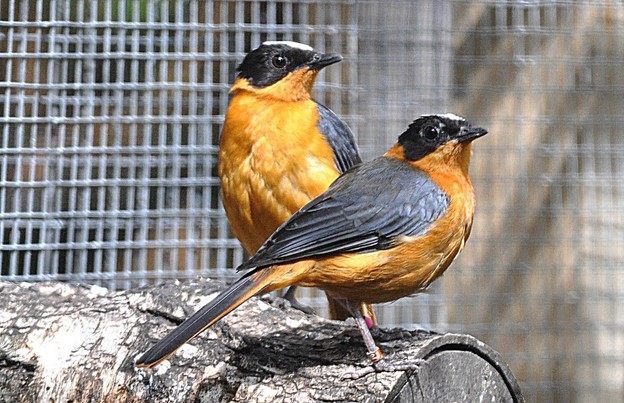
This is my breeding pair.Some of the photos were taken by a good friend of mine and softbill breeder, Eric Callaghan
The Snowy Crowned Robin Chat is a beautiful foreign softbill from all across central Africa. It is not to be confused with the White Headed Robin Chat which is as big as a mistle thrush, whereas the Snowy Crowned is a little smaller than a blackbird. I was lucky to get a pair from one of the top foreign bird breeders in England, Peter Moore. He also gave me other foreign softbills which I’ll write about in other articles.
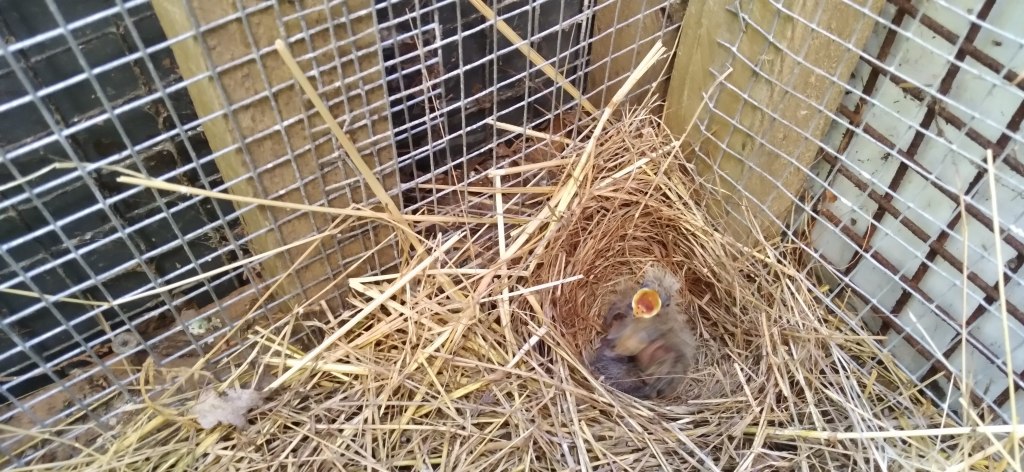
I have kept them in the same flight as the other birds I am writing about. As I’ve mentioned, I have all types of nest boxes and pans around. The Snowy Crowned Robin Chats nested in half-open boxes and a log-type nest. They use leaves, moss, and coconut hair.
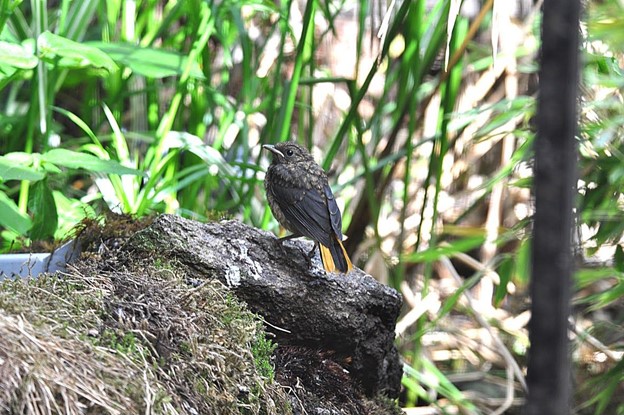
One of their youngsters
They normally lay 3-4 eggs and 2-3 hatch successfully. They are great parents and have never lost youngsters for me. I have bred them for several years and I never had to assist in any way with rearing
I feed them the same food as the rest – Slaat soft insect mix which is the main diet for all my birds. You can feed them on any soft food mix that’s available in your local pet shop. There are different manufacturers with softbill insect mix. Bird Jungle in Dublin has a good selection.
My veg mix is the same (broccoli, carrot, grated cheese run through a mincer to a fine mix). and It’s a simple mix and I’m happy with it. Some people add couscous. I also leave an apple and orange sliced in half lying on trays hanging around. You can try out different fruit & veg mix that you think will be of benefit to them.
I hang all my food on chains from the roof. I use big trays from flower pot bases. It’s the best rodent proof system for me, even though I know they can climb down the chain.
Luckily, so far I haven’t had many problems with rodents. When I do have a visit, I find the entrance hole, fill it with crushed blue block (Storm) and cover it so the birds can’t get at it. When it stops disappearing I know my visitors are gone.
skylARKS
.
I was asked to write an article on softbills, although I don’t have a lot of experience as I’ve only been keeping them for about 7 years. I can only talk about what I’ve bred.
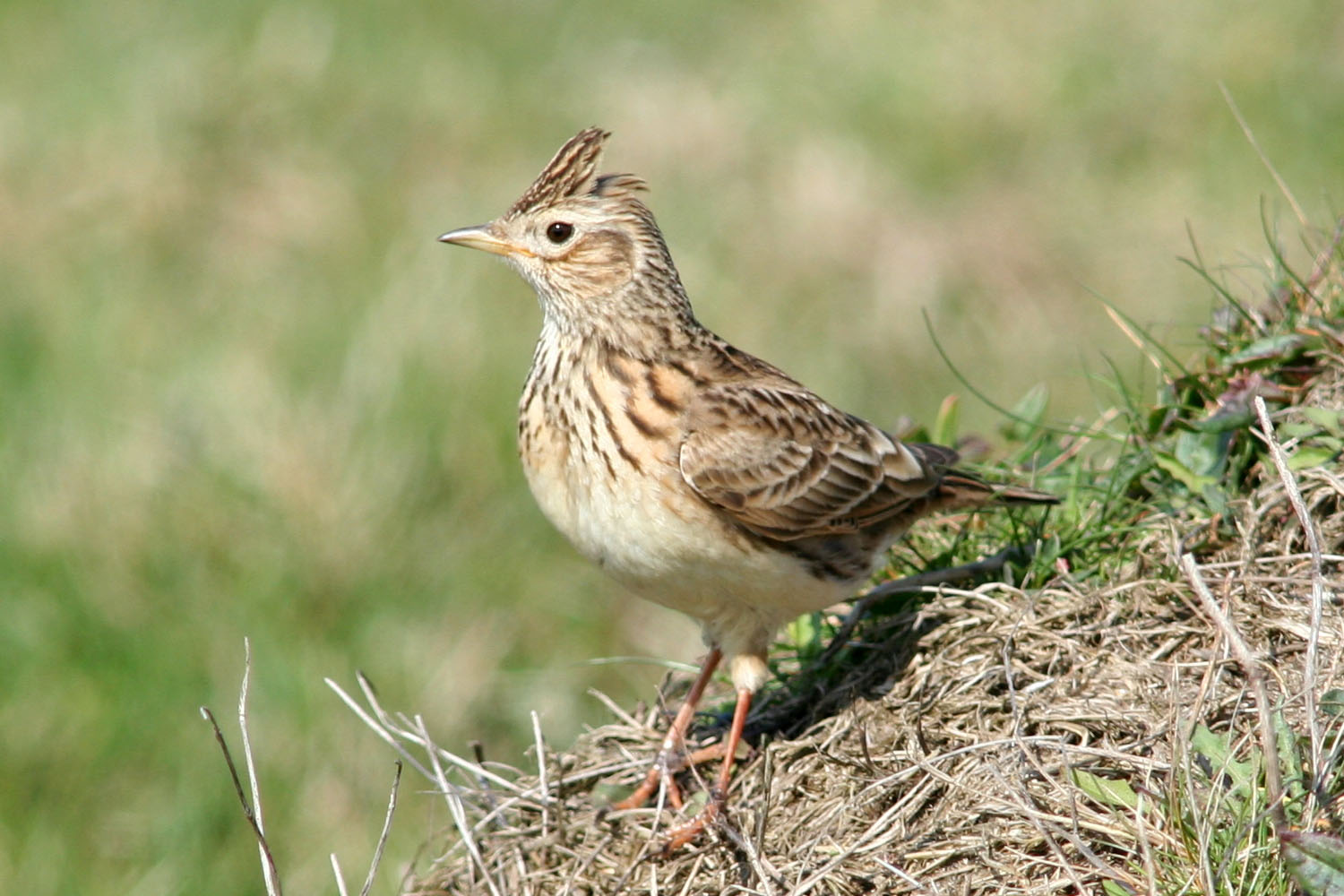
I’ll start with skylarks. They’re another bird whose numbers are dwindling in the wild through farming, cutting fields for quick turnover, and pesticides.
They are a good softbill to start with and a lovely bird to have in your aviary for song and display to the hen. They run around on the ground picking up bits and pieces, insects etc. The male will sing on the ground or on a perch or a wooden nest box, anywhere he can land. The male is slightly bigger than the hen, and has a small crest.
I’ve kept them in mixed flights with successful breeding for a number of years. I feed them on a softbill mix that can be bought in most pet shops. I use Slaats insect mix. I always leave a small seed mix (Siskin) available. Most softbills will eat small seeds in winter. I feed them a supply of mealworm alternated with frozen pinkies once or twice a week in winter, and daily coming into the breeding season. When they have chicks and are in mixed flights with other birds, I give them plenty 2-3 times a day so they don’t go short.
I also feed them a mix of broccoli, carrot, cheese minced, 1 or 2 times a week off-season. Then, as the breeding season approaches, I start to increase the amount and add vitamins. I then feed them 2-3 times a day during the breeding season.
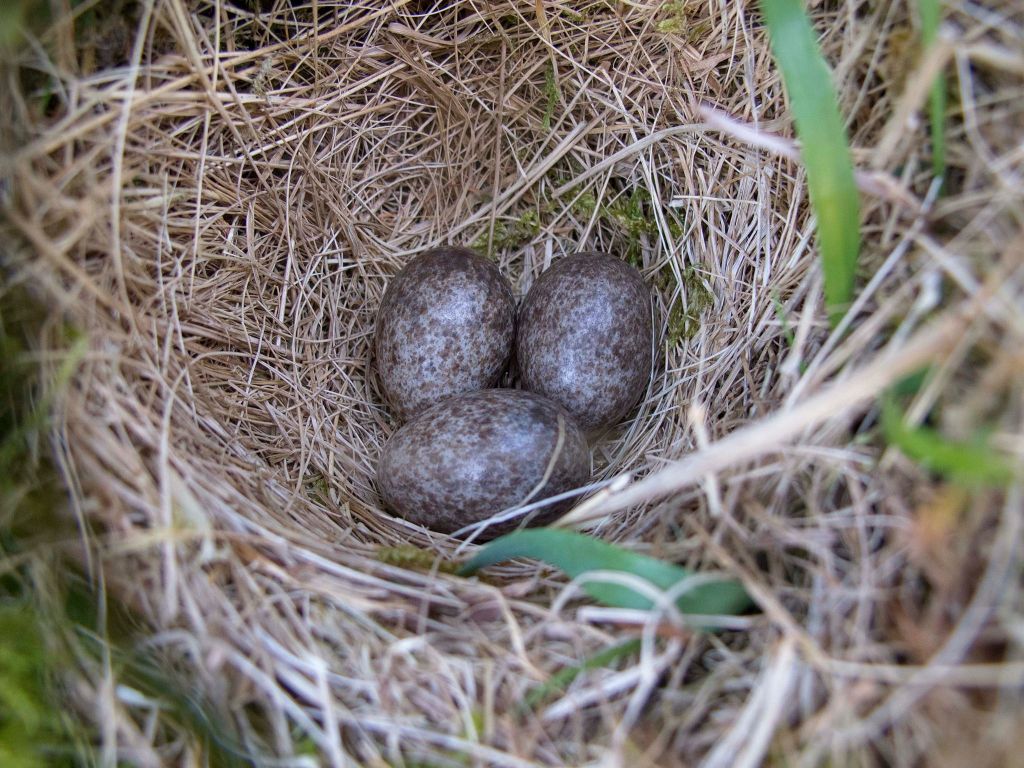
They make a nest on the ground of leaves, hay, or coconut fiber, in a corner or anywhere there’s cover or shade.
 Down the Shed